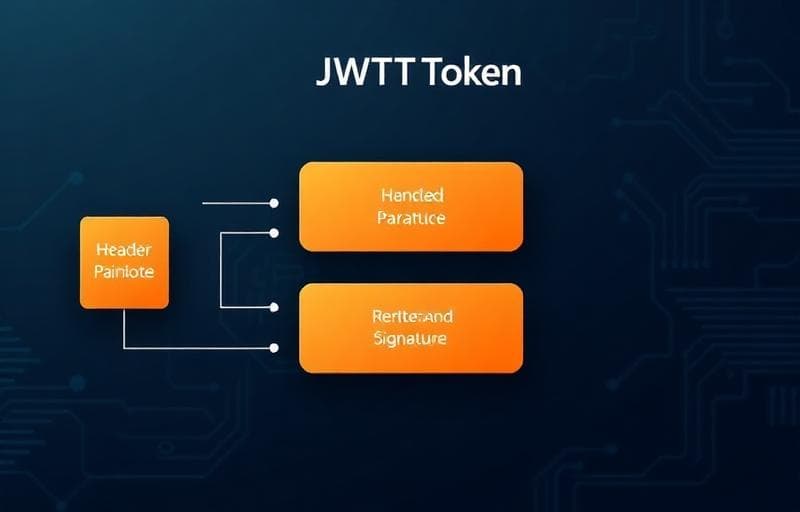
What Is a JWT?
A JSON Web Token (JWT) is a compact, URL-safe token used for authentication and information exchange. JWTs are the standard for modern API authentication.
JWT Structure
A JWT has three parts separated by dots:
header.payload.signature{
"alg": "HS256",
"typ": "JWT"
}
{
  "sub": "1234567890",
  "name": "John Doe",
  "iat": 1516239022,
  "exp": 1516242622
}
Common JWT Claims
| Claim | Full Name | Purpose |
|---|---|---|
sub | Subject | User ID |
iat | Issued At | When token was created |
exp | Expiration | When token expires |
iss | Issuer | Who created the token |
aud | Audience | Who the token is for |
role | Role | User's permission level |
The JWT Decoder tool instantly parses any JWT:
Security Best Practices
- Never store JWTs in localStorage — use httpOnly cookies instead
- Set short expiration times — 15 minutes for access tokens
- Use refresh tokens — longer-lived tokens for getting new access tokens
- Validate on the server — never trust client-side token validation alone
- Use strong signing algorithms — prefer RS256 over HS256 for public APIs
JWTs Are NOT Encrypted
Critical misunderstanding: JWTs are signed, not encrypted. Anyone can decode the payload — the signature only ensures it hasn't been modified. Never put sensitive data (passwords, SSNs, credit cards) in JWT payloads.Related Tools
- Base64 Encode/Decode — JWTs use Base64URL encoding
- Unix Timestamp Converter — decode
iatandexptimestamps - Hash Generator — understand the hashing used in signatures
jwt
authentication
security
tokens
api